A validated AI Use Case Portfolio
Each candidate use case specified to the depth required for budget approval, SOW drafting, or RFP issuance.

AI Accelerator
Turn a pile of candidate AI use cases into a sequenced, budget-ready plan.
Most organizations don't have an AI strategy problem. They have an AI prioritization problem. Leaders are surfacing use case ideas from every department, vendors are pitching the next transformational platform, and the organization is trying to decide which of thirty candidate initiatives deserve real investment. AI Roadmap is the accelerator that converts that noise into a structured, defensible plan. In four to six weeks, Spruce validates and prioritizes your candidate use cases, scores each against a multi-dimensional framework, and delivers a phased roadmap with the specificity your finance, technology, and business leaders need to commit budget and begin execution.

At the end of AI Roadmap, you have three things you didn't have before:
Each candidate use case specified to the depth required for budget approval, SOW drafting, or RFP issuance.
A sequenced implementation plan, with dependencies mapped and aligned to your budget calendar.
A shared, evidence-based view across business, technology, and operations on what to do first, what to do next, and what not to do at all.
Surfacing candidates from business leaders, technology teams, and operational owners; screening each for strategic fit and feasibility.
Scoring every validated use case against the six-dimension framework described below.
Sequencing prioritized use cases into implementation waves with dependencies, resource requirements, and rough-order-of-magnitude investment estimates.
Each top-priority use case specified to a level that supports budgetary approval and SOW or RFP drafting, whether the delivery team is Spruce, yours, or another vendor's.
AI Roadmap is structured as a four-to-six-week engagement across three phases. Each phase ends with a validation session so your stakeholders stay aligned as the roadmap takes shape:
Discovery workshops, stakeholder interviews, and review of existing candidate lists. We pressure-test each candidate against strategic fit, data availability, and organizational sponsorship.
Scoring against the six-dimension framework; feasibility checks on data, model, and integration paths; risk and compliance review.
Sequencing, dependency mapping, rough-order-of-magnitude estimation, and drafting of use case specifications; final stakeholder working session and executive presentation.
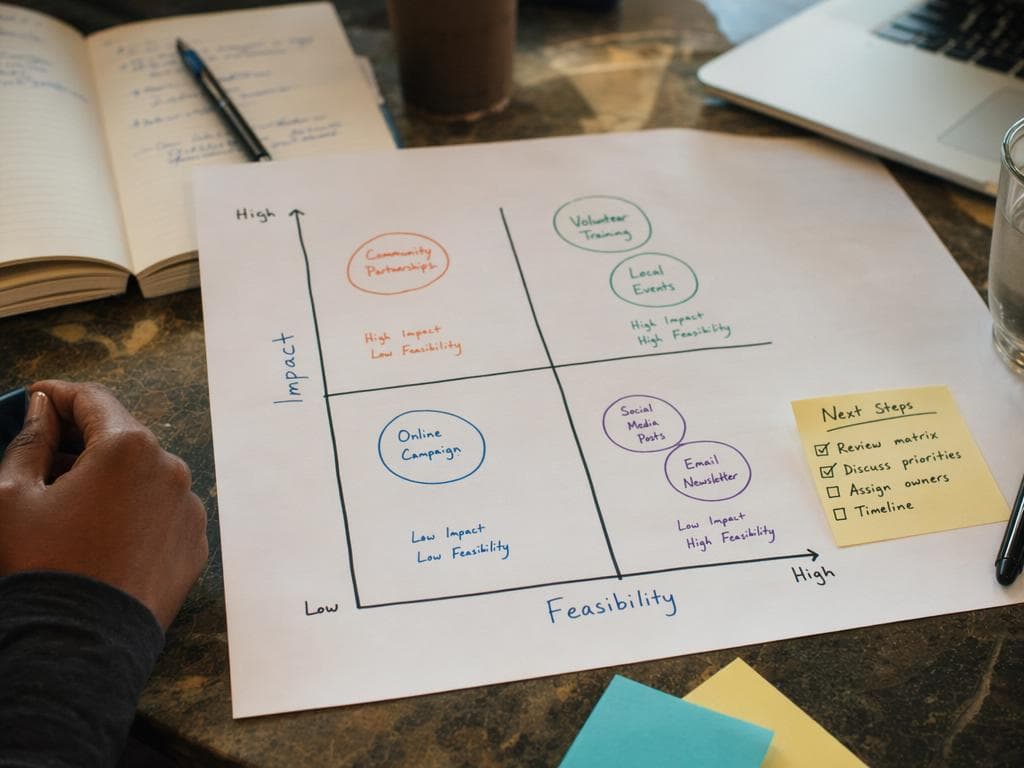
Every candidate use case is scored across six dimensions. The framework is designed to make tradeoffs visible, not to collapse them into a single score:
Every validated candidate with scored prioritization, data and integration profile, and recommended next step.
A time-based plan with implementation waves, dependencies, resourcing, and funding guidance.
Impact versus feasibility view that leaders can use directly in board and executive conversations.
Top-priority use cases specified in enough depth to support budgetary approval, SOW drafting, or RFP issuance.
Tied to your budget calendar and to the phased roadmap.
AI Roadmap engagements are led by a senior Spruce advisor with hands-on experience delivering AI in production. The core team typically includes a lead advisor, a solution architect who can pressure-test technical feasibility, and a domain specialist for your industry. For larger portfolios, we add a second advisor to run parallel discovery streams.
Every Spruce engagement begins with a short conversation about your goals, constraints, and timeline.